 |
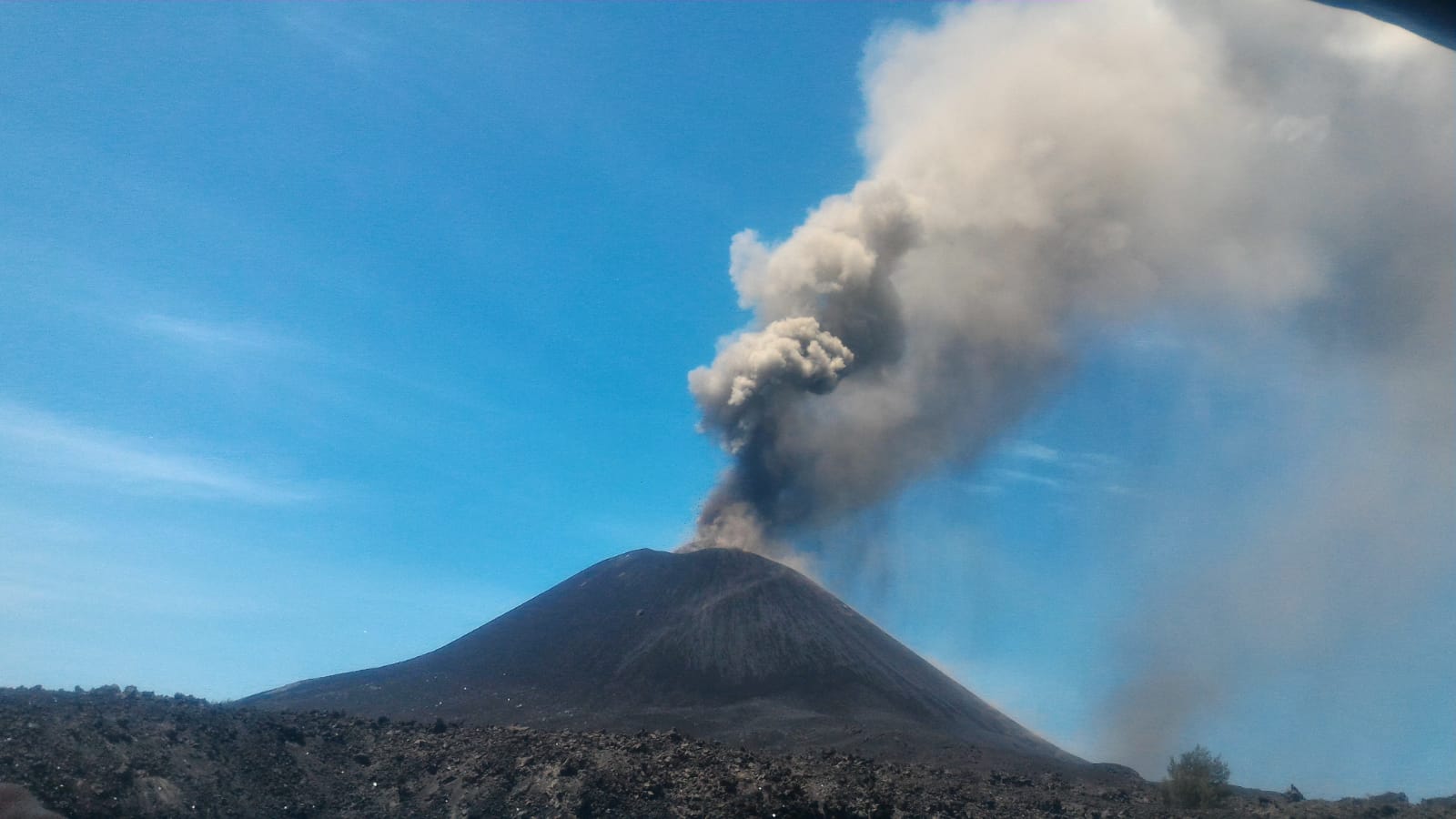
Krakatau Islands is a group of volcanic islands formed from the eruption of Mount Krakatau in 1883. The archipelago includes Rakata or Krakatau Besar, Panjang or Krakatau Kecil, Sertung, and Anak Krakatau.
Krakatau volcano is a nature reserve, a world heritage, so special permit is required that is Permit Entry Conservation Area (SIMAKSI) that can be obtained at Natural Resources Conservation Agency (BKSDA Lampung). Some money is donated by the visitors as a conservation effort conservation effort. Commercial activities are not allowed in this area, so be sure to bring enough food logistics. And most of all, this nature reserve is a legacy that must be preserved, from simple things, keeping clean. Along the trekking slopes of Krakatoa, we remind each other not to throw garbage and pick up if there is garbage found.
The black sand on the volcanic island's coast becomes its own beauty that can not be juxtaposed with any beach. This black sand also lies along the slopes of Krakatau. Krakatau peak is at an altitude of 230 mdpl. Trekking feels challenging to me because of the sandy soil on the steep slopes with no trees with air mixed with sulfur. Yet the sight seen from the top of the slopes as the sun rises is very beautiful. It's worth it.
On one side of Rakata Island (or also known as Pulau Ibu Krakatau), there is an arch that is shaped like a chili so called Legon Cabe ('legon' means curved and 'chilli' comes from the word chili) by the local community. This point, the point with the most beautiful underwater life in Krakatoa. Warm waters of the volcanic islands is the best tool for the growth of coral reefs and other marine biota. One of Indonesia's underwater treasures of wealth that must be preserved.